
Commercial janitorial services
Commercial cleaning services by facility type.
Choose your facility type to review common cleaning areas, operating priorities, scheduling requirements, and site-access considerations.
Services by facility type
Each page explains the areas commonly serviced, the operating details that affect cleaning, and the questions to settle in the written scope of work.
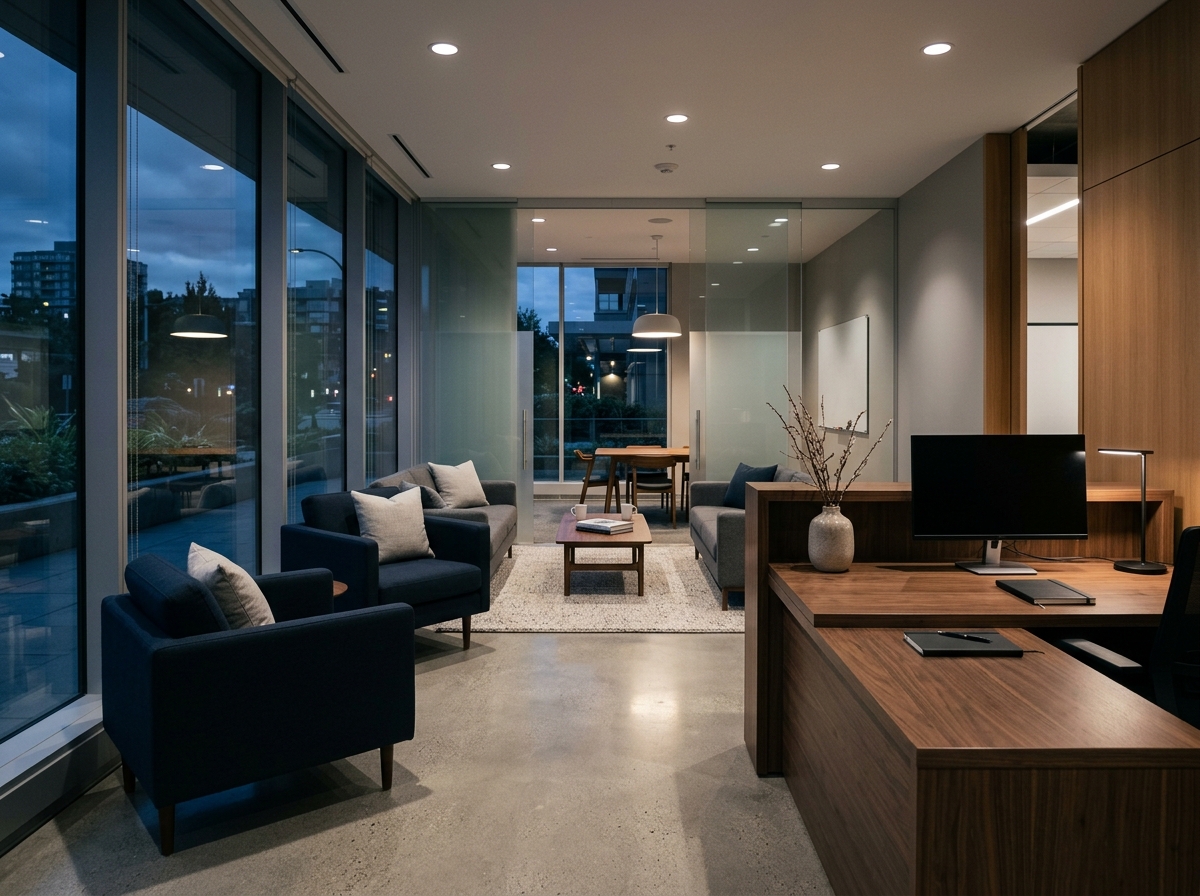
Offices & commercial buildings
Office cleaning services planned around tenants, shared amenities, and after-hours access.
↗︎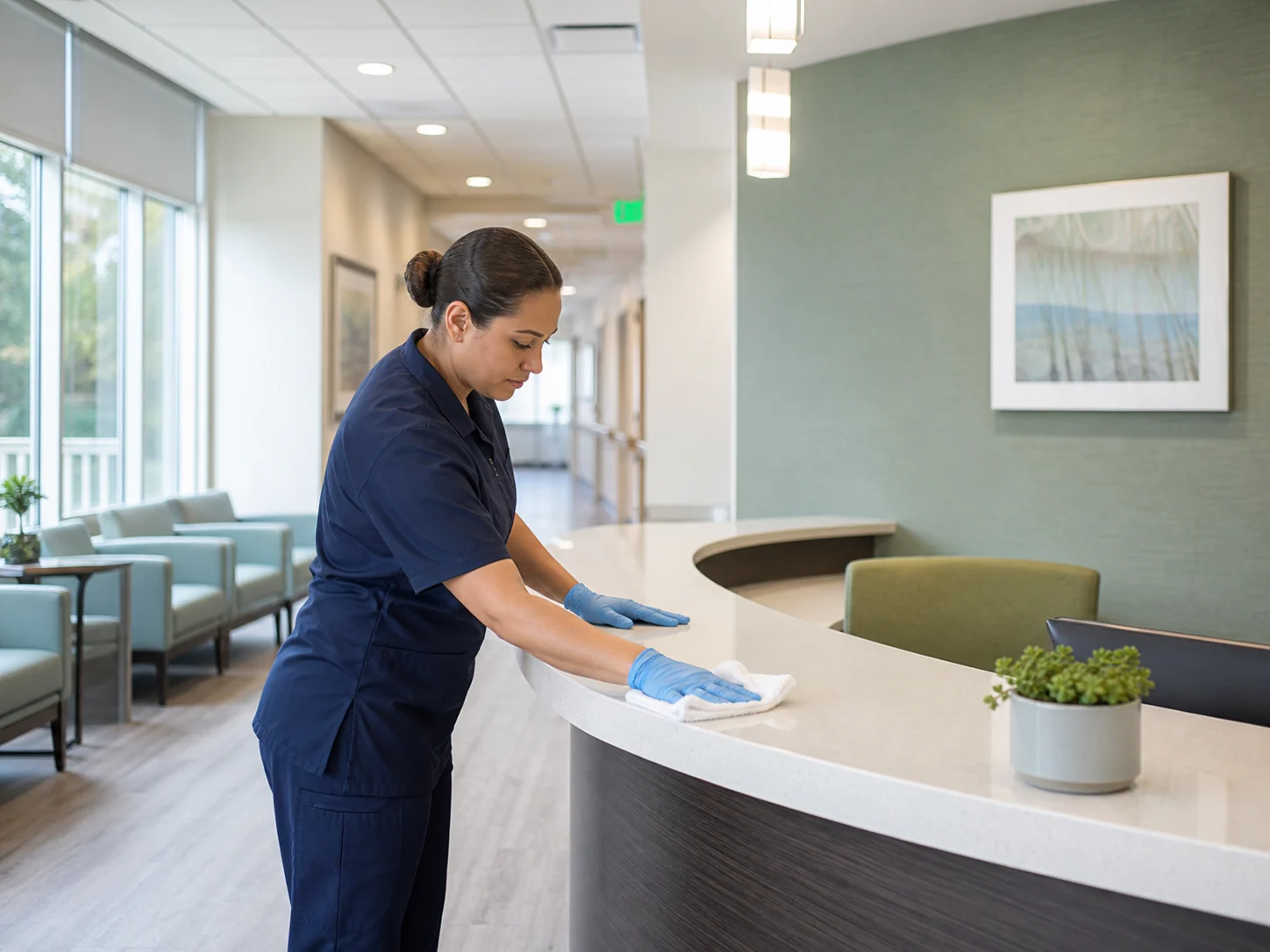
Medical & healthcare facilities
Medical office and clinic cleaning under facility-defined protocols.
↗︎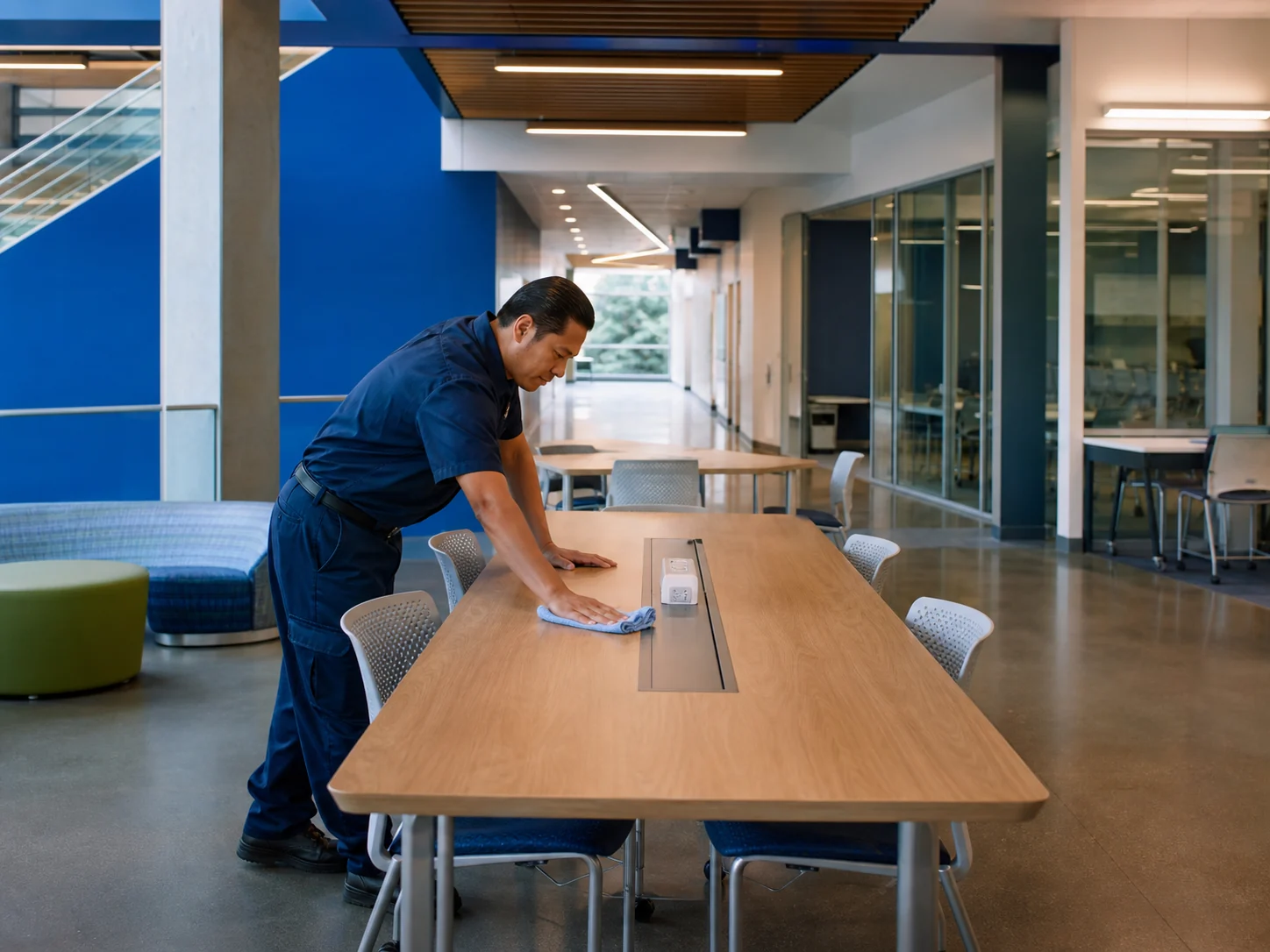
Education facilities
School cleaning scheduled around classes, programs, and the academic calendar.
↗︎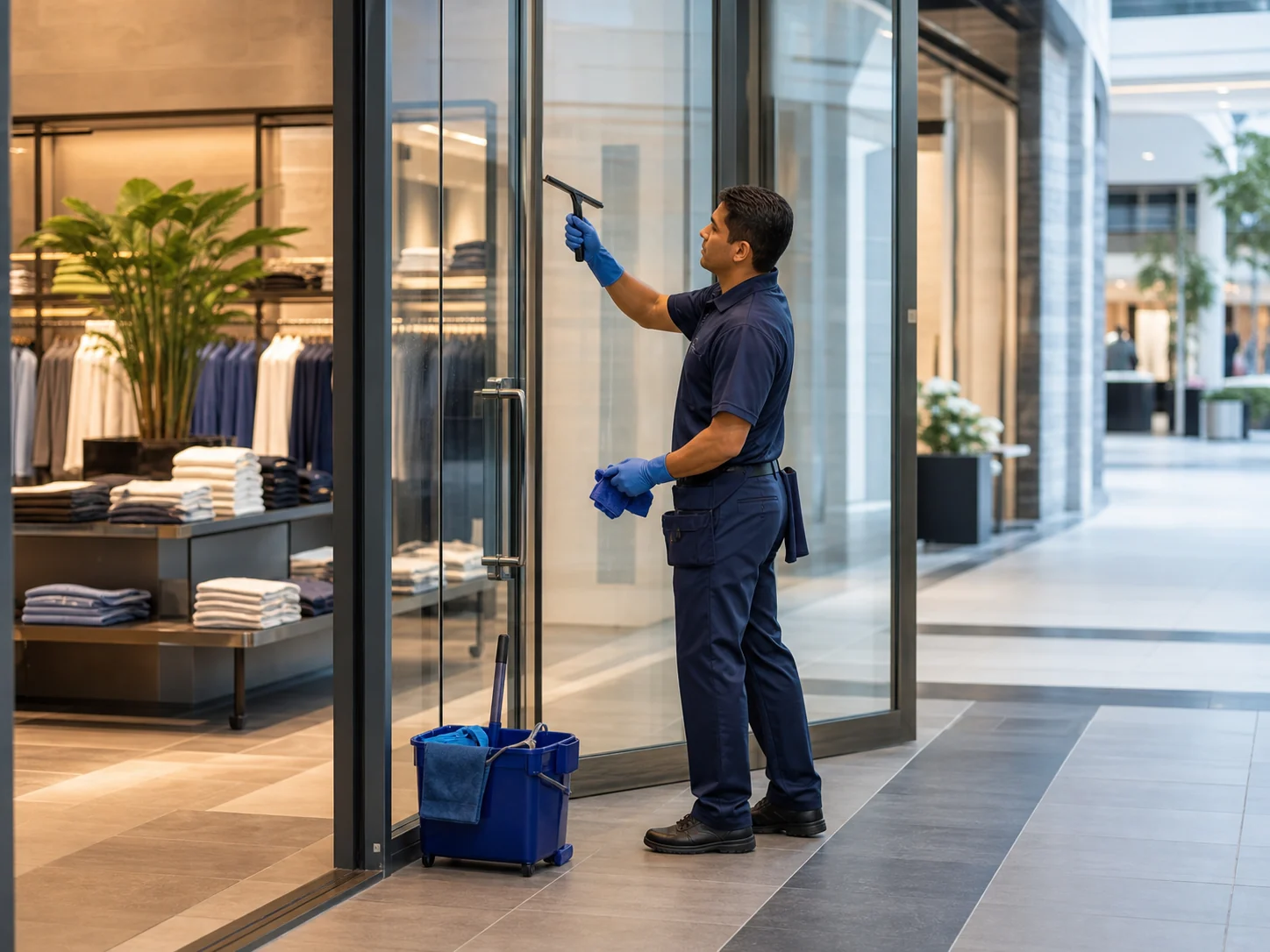
Retail & shopping centres
Retail store and shopping centre cleaning timed to opening, trade, and close.
↗︎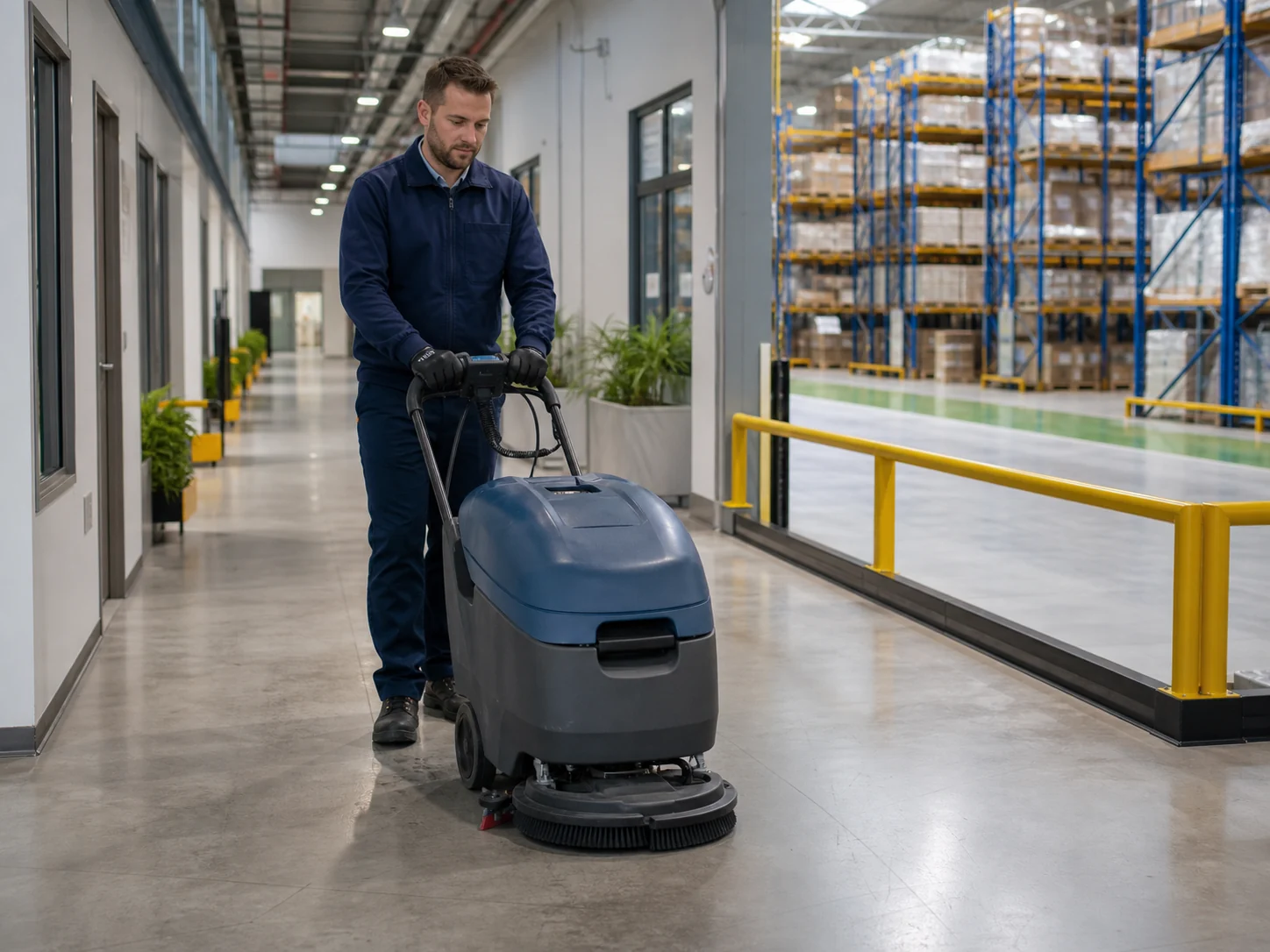
Warehouses & industrial facilities
Warehouse and industrial cleaning planned around shifts, zones, and site safety rules.
↗︎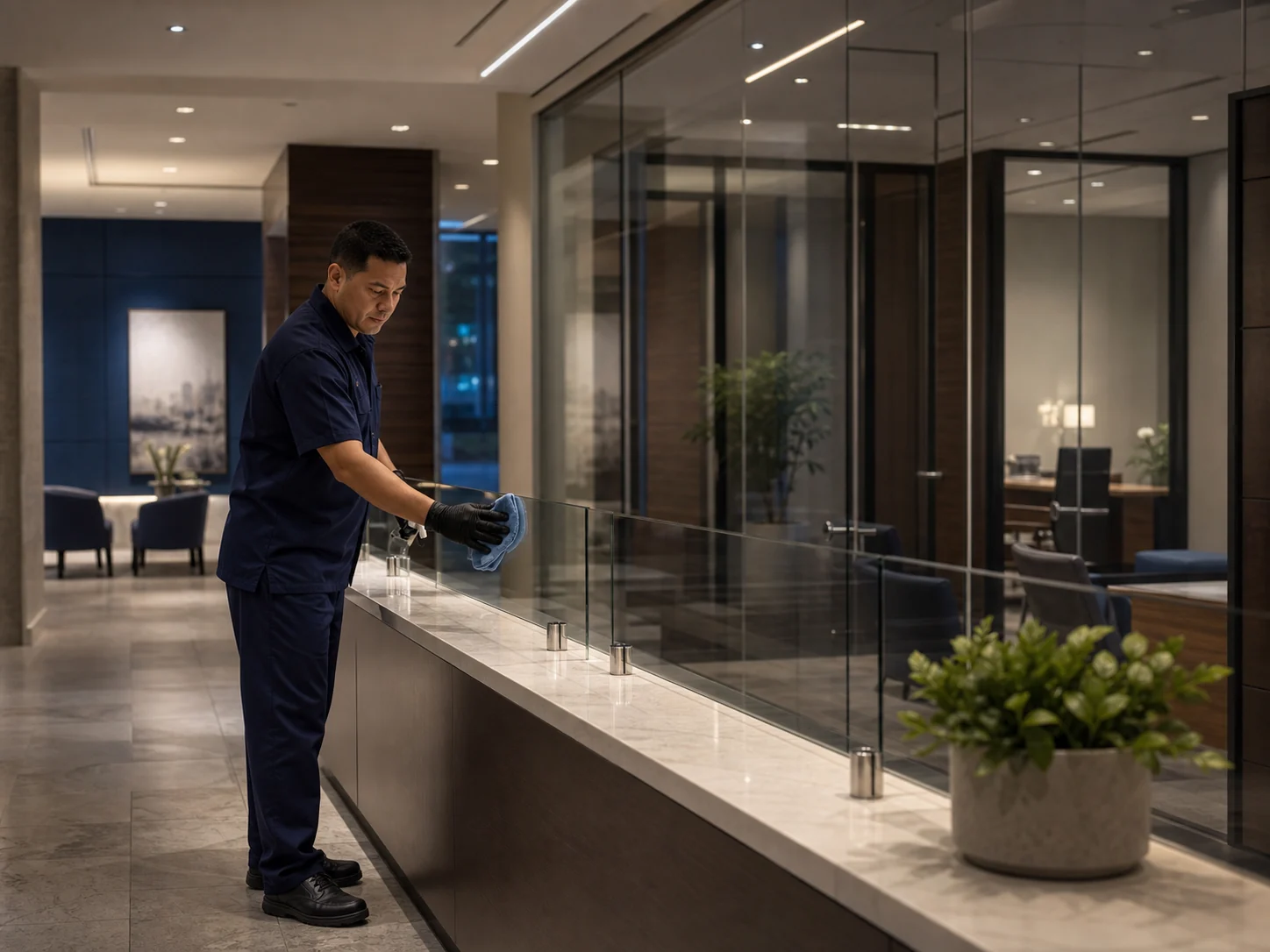
Banks & financial institutions
Bank and credit union branch cleaning within documented access and privacy rules.
↗︎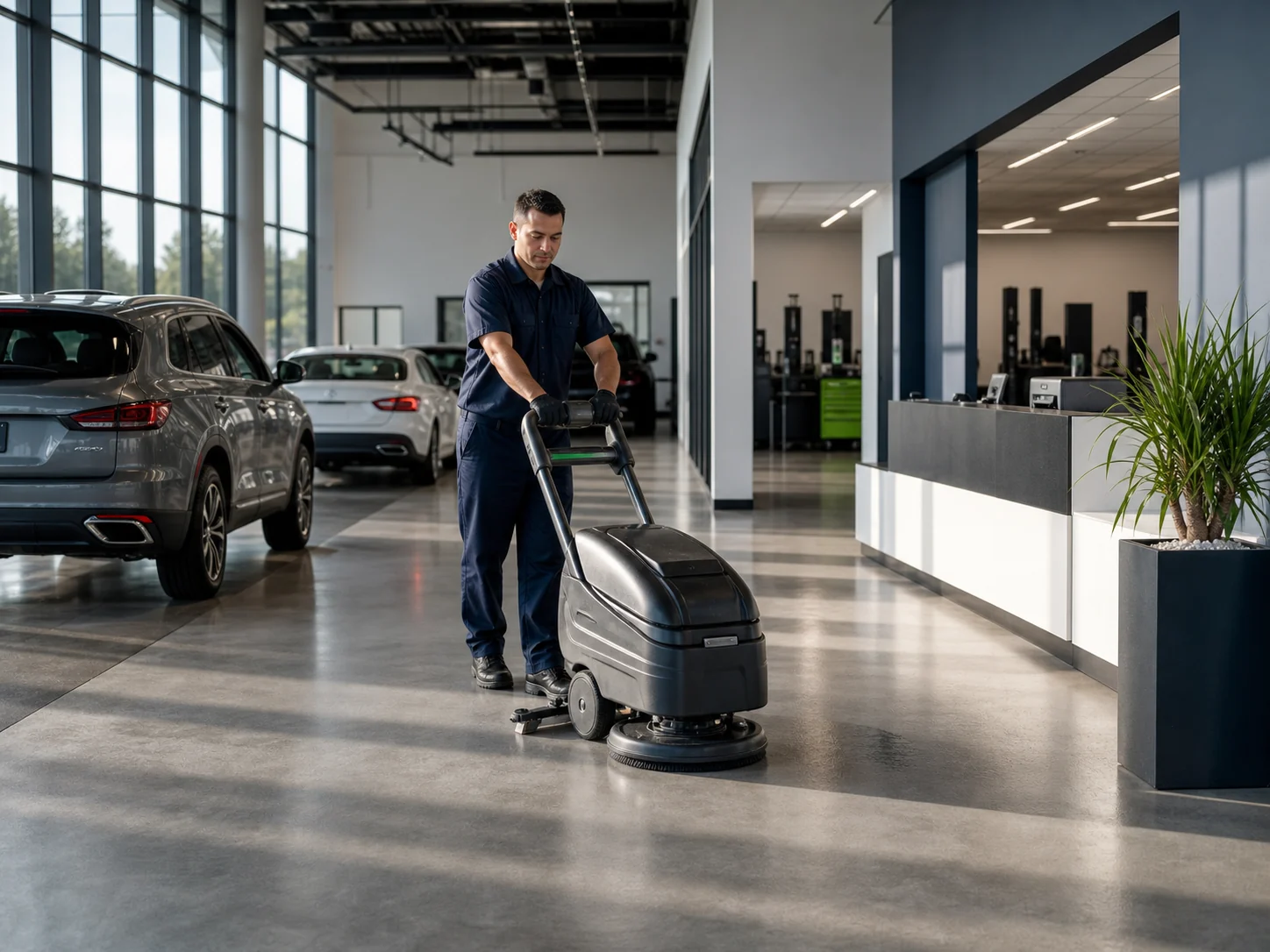
Car dealerships
Showroom, service reception, and customer lounge cleaning for auto dealerships.
↗︎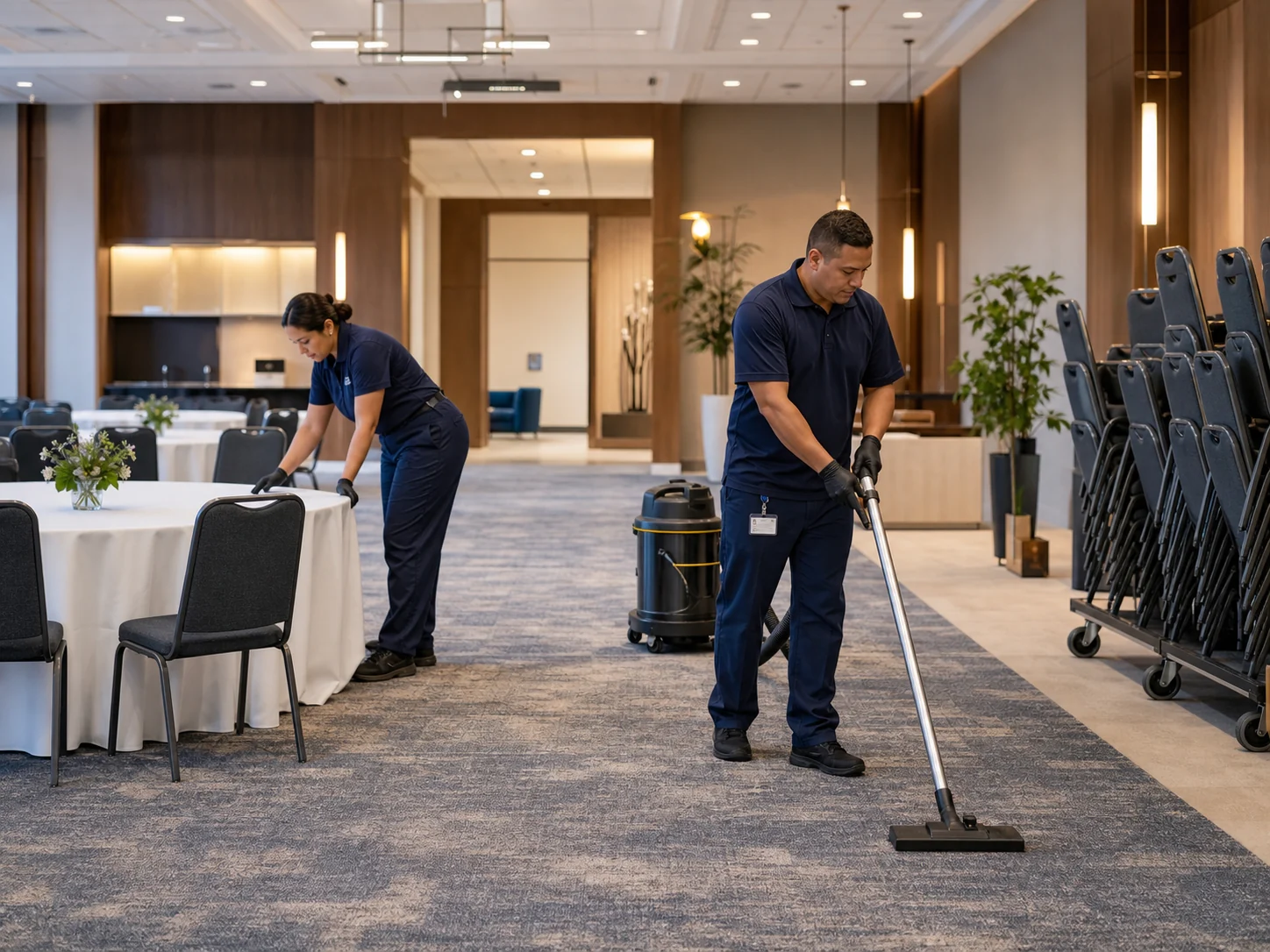
Conference & event spaces
Event venue and conference centre cleaning built around doors-open and reset deadlines.
↗︎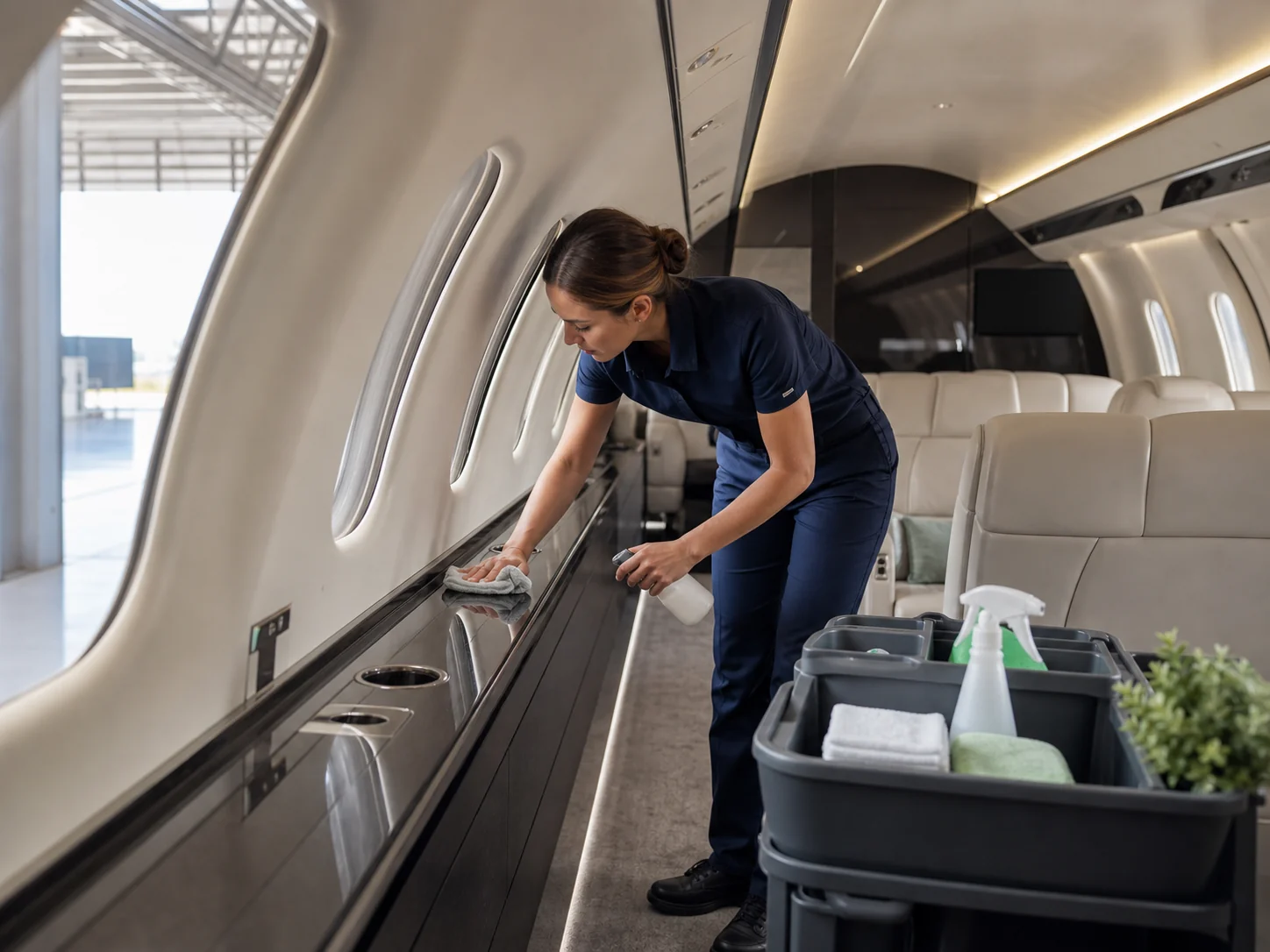
Aviation & aircraft interiors
Aircraft cabin, lounge, office, and hangar support-area cleaning under confirmed access.
↗︎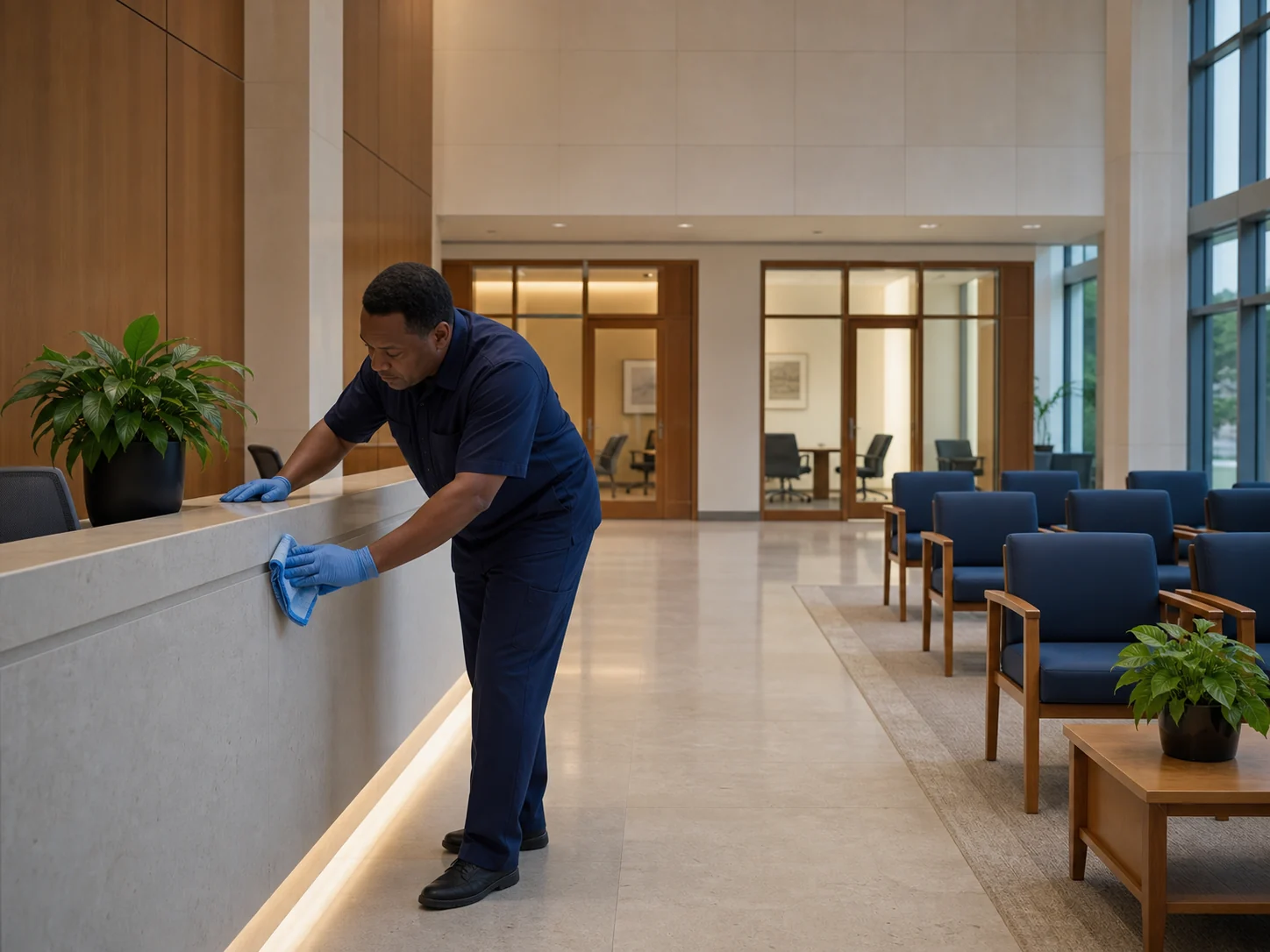
Embassies & consular facilities
Consulate and consular office cleaning under documented access and privacy procedures.
↗︎A complete scope of work
Every area needs a task and service frequency.
Your quote will identify the included rooms and surfaces, cleaning method, frequency, access instructions, periodic work, and any exclusions.
How a scope of work is written
What “included” means in a written scope.
A scope of work has three parts.
Per-visit tasks are completed every time the team is on site: for most facilities that is washrooms, kitchens and staff rooms, waste and recycling, entrances, high-touch surfaces, and floors in the areas used that day. Periodic tasks happen on a stated cycle, such as interior glass, high dusting, or machine floor care, and are listed with their frequency. Exclusions and client responsibilities name what the scope does not cover, for example specialized equipment, restricted rooms, or items your own staff handle.
Frequency is set per area, not per building. A typical scope combines several patterns: five nights a week for offices, clinics, schools, and retail with daily washroom and kitchen demand; two or three evenings a week for smaller offices and professional suites; weekly for low-occupancy spaces; daytime service for multi-tenant lobbies, public washrooms, showrooms, and event days; and periodic or one-time work such as interior glass, high dusting, periodic floor care, school-break work, and post-event resets. Tell us the rooms that need attention every visit and the ones that can wait; the scope of work records the frequency for each.
Service questions
Questions about scope and frequency.
What is the difference between regular cleaning and deep cleaning?
Regular service maintains a commercial building on a set frequency. Deep cleaning is periodic or one-time work on surfaces that are not in the per-visit list, such as periodic floor care, high dusting, or a full reset of a space. Both are written into the scope of work with a frequency or a date.
How is a commercial cleaning quote built?
There is no fixed rate per square foot. The quote reflects the area cleaned, the tasks at each visit, the frequency of each task, the service window available, the number of washrooms and kitchens, floor types, and any access or scheduling constraints. Two buildings of the same size can be priced very differently if one has six washrooms and a public lobby and the other has two washrooms and a single tenant.
Who supplies consumables such as paper, soap, and liners?
Empty dispensers are a frequent complaint in commercial buildings, so the scope of work states who supplies and who monitors and restocks paper, soap, sanitizer, and liners. Dispenser checks are a per-visit task and the responsible party is named in writing.